
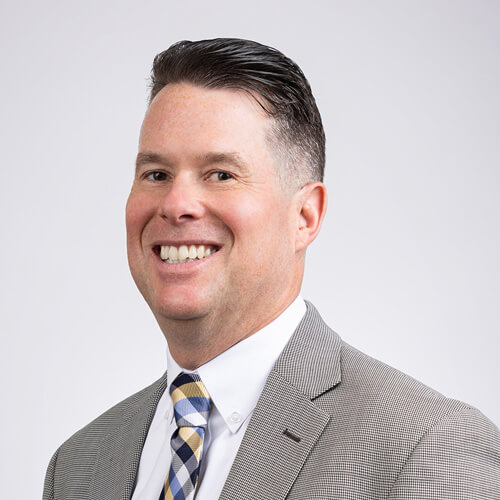
Reed Skaggs, Ph.D.
Dr. Reed Skaggs serves as Chief Strategy and Business Operations Officer at Lewis-Burke Associates, where he integrates deep technical expertise with executive leadership to translate research and business priorities into strategic outcomes.
With more than 25+ years at the intersection of national security science and federal budget execution including senior roles at the Army Research Laboratory, as Deputy Assistant Secretary-level leadership within Army Research & Technology, and at the White House Office of Science and Technology Policy, Reed has built and managed S&T portfolios spanning basic research to advanced development.
Reed serves Lewis-Burke’s national security team by creating defense R&D portfolio intelligence that align research domains with acquisition pathways, appropriations mechanics, and strategic modernization priorities. Reed’s focus is to help institutions compete, scale, and contribute to national Security S&T. Reed also serves as the Chaiman of the National Defense Industrial Association’s Science, Engineering and Technology division.
For Lewis-Burke he has orchestrated firm growth, expanded client portfolios across defense and research sectors, and secured millions in federal R&D funding through strategic advocacy, legislative language development, and portfolio positioning. His work bridges technical literacy across emerging technologies with high-level policy and acquisition strategy.
Reed earned his Ph.D. in Physical Chemistry from The George Washington University and his B.S. in Chemistry, summa cum laude and Phi Beta Kappa, from Hampden-Sydney College. A native of southern Virginia, he resides Alexandria with his wife, Jennifer, where outside of work he can be found on the golf course or cheering on the Ravens and Nationals.


Miriam Quintal
Miriam Quintal boasts seventeen years of advocacy and client success at Lewis-Burke, managing the federal relations portfolios for large academic institutions, scientific societies, industry, and other research organizations. As Division Leader for Issue Driven Organizations, she continues to work across the firm’s portfolio but is leading a new effort to enhance engagement, connections, and success with philanthropy, coalitions, associations, and other clients looking to engage on national issues and profile-raising activities. Previously she was the Managing Principal for the firm, overseeing the firm’s client engagement and issue practices. Miriam fiercely protects client priorities, leveraging her unique combination of scientific training with political insight.
Miriam is a prominent leader in National Science Foundation advocacy, co-chairing the Coalition for National Science Funding (CNSF) and working closely with the higher education and research advocacy community to guide policy for and champion the Foundation. Her wealth of knowledge and federal research enterprise acumen provides value to all components of client interests: supporting executives and university leadership, shepherding research initiatives, and shaping policy across a range of issues. Major advocacy efforts have included successfully guiding large-scale science projects through the appropriations process, restoring funding for key programs proposed to be eliminated in the President’s budget request, establishing new agency funding for research infrastructure, and creating opportunities for clients to showcase research and leadership in Administration initiative areas.
Issue Expertise: Basic research (National Science Foundation, Department of Defense, Department of Energy Office of Science), STEM education, computing and computational science, math and physical sciences, engineering, and space and astronomy.
Additional Experience: Miriam has twice served as NSF lead for the Association of American Universities (AAU) Innovation Task Force. Before joining Lewis-Burke, Miriam gained policy experience as a Mirzayan Science and Technology Policy Fellow with the Board on Science Education at the National Academy of Sciences, Engineering, and Medicine. At the Academies, she contributed to several projects, including a review of the National Oceanic and Atmospheric Administration (NOAA)’s education programs and a study of gaming and simulations for science education.
Vital Statistics: Miriam developed her passion for politics while growing up in the DC region, before venturing north to get an undergraduate degree in chemistry with highest honors from Smith College and a Masters Degree in Organic Chemistry from Harvard University. She has been a National Science Foundation Graduate Research Fellow and a Fulbright Fellow. Miriam loves raising her son in DC alongside her wife. She is deeply engaged in her community, serving as a Founding Trustee and coordinator for Minyan Segulah, a local independent prayer community.

Leland Cogliani, J.D.
Leland Cogliani has over 20 years of experience advancing science and technology priorities for research institutions. Leland works closely with congressional authorizing and appropriations committees and federal research agencies on behalf of academic institutions, scientific societies, facility management organizations, and energy startups to create new research initiatives and programs, advance science, and energy infrastructure projects, and increase federal research funding.
As the firm’s Energy Practice lead and Co-Chair of the Energy Sciences Coalition, Leland is a leading voice in the higher education and research advocacy community to advance basic and applied energy research and development programs, especially at the Department of Energy (DOE). Leland also uses his substantive subject matter expertise in nuclear security and nonproliferation science and technology issues to grow the participation of institutions of higher education in addressing national security challenges. Leland is currently a board member of the Arms Control Association and is a frequent speaker at science and technology forums.
Prior to joining Lewis-Burke, Leland was the lead Senate Appropriations Committee staff member, with budget and oversight responsibility for $17 billion in federal programs, including the DOE Office of Science, the Advanced Research Projects Agency-Energy (ARPA-E), the National Nuclear Security Administration (NNSA), DOE intelligence programs, and DOE national laboratories.
Issue Expertise: Appropriations and congressional budget process, basic and applied energy research (DOE Office of Science; ARPA-E; renewable, energy efficiency, fossil, carbon management, nuclear, and grid-related research); emerging technology areas, including artificial intelligence, quantum science and technology, microelectronics, advanced computing, and biotechnology; energy infrastructure investments; DOE national laboratories; nuclear security and nonproliferation (National Nuclear Security Administration)
Additional Experience: Prior to the Senate, Leland was a Senior Analyst in the Natural Resources and Environment Division at the U.S. Government Accountability Office (GAO) with oversight responsibilities over U.S. nuclear weapons and nuclear nonproliferation programs. He authored more than a dozen reports to Congress on science and national security issues, including life extension programs of nuclear warheads, the U.S. fusion program, and the International Atomic Energy Agency nuclear safeguards activities.
Vital Statistics: Leland earned his Bachelor of Arts in International Studies at Boston College and his Master of Arts in International Affairs at the George Washington University Elliott School of International Affairs. He received a Juris Doctor from Catholic University Columbus School of Law. Leland is a proud father of two daughters and enjoys traveling with his family around the country and the world seeking new adventures. Leland is a fourth-degree black belt in taekwondo and continues to train twice a week. Born in Rome, Italy, Leland is a native Italian speaker.

Naomi Webber, Ph.D.
Dr. Naomi Webber serves as the Managing Principal at Lewis-Burke Associates, building on over 24 years of science policy and research administration experience to advance client priorities. In this role, Naomi oversees strategic direction and client relationships for the firm.
Within Lewis-Burke, Naomi plays a leadership role with universities, providing expertise in both fundamental and applied research, with a focus on engineering, physical sciences, and computer sciences, as well as international research collaboration. Naomi has a Ph.D. in Physical Chemistry and extensive experience in research administration, strategic planning, science policy, and international relations, which enables her to support client activities in a broad range of areas.
Before joining Lewis-Burke, Naomi worked at the UK research funding agencies for over nine years, where Naomi gained a broad range of experience including roles in grant proposal management, university relationship engagement, international affairs, and served as Chief of Staff. Naomi then moved to the British Embassy in the U.S. to build international research collaborations between UK and U.S. research funding agencies. In that role, Naomi developed insight into a broad range of U.S. federal research agencies.
Issue Expertise: engineering, physical sciences, computer sciences with a strong focus on basic research and the National Science Foundation, as well as international research collaborations across federal agencies.
Additional Experience: Before joining Lewis-Burke, Naomi represented Research Councils UK (now UK Research and Innovation) at their U.S. office at the British Embassy in Washington, D.C. In that role, Naomi shared intelligence between the UK and U.S. on science and innovation policy, facilitated international visits for both British and American policy makers, and help develop new collaboration programs and activities between the UK Research Councils and U.S. funding agencies.
Vital Statistics: Naomi holds a Bachelor of Science degree in Chemical Physics from the University of East Anglia in the UK (with a year of her studies spent at the University of Texas in Austin). Naomi also holds a Ph.D. in Physical Chemistry from the University of East Anglia. Coming from the UK, Naomi enjoys a nice cup of tea, especially if it’s accompanied by a biscuit!

Bridget Krieger
Bridget Krieger is a trusted advocate on Capitol Hill and a champion for federal research agencies, most notably the U.S. Department of Agriculture (USDA) and the National Science Foundation (NSF). Having worked for two decades representing the interests of research and higher education entities, Bridget designs and implements federal and congressional strategies that attain short-term wins while solidifying the foundation for long-term success.
Bridget covers a diverse range of issues and leads Lewis-Burke's growing agricultural portfolio. Whether navigating the highly political Farm Bill and agriculture appropriations processes, Bridget ensures dynamic strategies with multiple paths for success, avoiding a single point of failure. Examples of past and current efforts include protecting vital life science programming, growing support for natural disaster mitigation, raising the profile of chronically underfunded disciplines, and securing funding for large-scale projects through the federal budgeting and congressional appropriations processes.
Issue Areas: agriculture, appropriations, farm bill, basic life sciences, natural disasters.
Additional Experience: Bridget gained government relations experience in the private and public arenas through appointments with former Congressman Dennis Moore of Kansas, Labour Party Headquarters in London, and Tulane University in New Orleans, LA.
Vital Statistics: Born and raised in Kansas City, Bridget is a proud alum of Tulane University where she earned a Bachelor of Arts in Political Science. When not discussing the importance of agricultural research and Cooperative Extension, Bridget can be found watching her KC teams at home with her husband and two kids.

Kari McCarron
Kari McCarron is a trusted and highly valued expert in higher education, bringing decades of experience within the federal higher education and scientific research enterprise, having lead education and science advocacy for associations, worked as a government relations representative for a major research university, and served within federal agencies. Kari focuses on funding for and advocacy of student and institutional aid, education research, cultural agencies, and tech-based economic development. She also works closely with clients on education regulations, tax policy, and immigration issues.
Kari previously served as Director of Congressional and Governmental Affairs with the Association of Public and Land-grant Universities (APLU) and as Senior Legislative Assistant within the Office of the President of the Massachusetts Institute of Technology (MIT). For nearly two decades, she has actively participated in associations, coalitions, and working groups related to higher education, scientific research, innovation, and student financial aid.
Issue Expertise: Higher Education Act and related education regulations, science and tech policy, economic development, taxation, immigration, education research, and humanities and arts programs.
Additional Experience: Kari enhanced her knowledge of science policy serving at the National Science Foundation (NSF) and the American Association for the Advancement of Science (AAAS). Kari also served as an Economist with the U.S. Department of Labor’s Bureau of Labor Statistics.
Vital Statistics: Kari earned her Bachelor of Arts in Economics from the University of Michigan. Wanting to combine her interest in economics and technological innovation, Kari received her Master of Science in Public Policy from the Georgia Institute of Technology. When not enjoying the quietness of her office or the halls of Congress, Kari can be found shuttling her three boys between soccer practices.
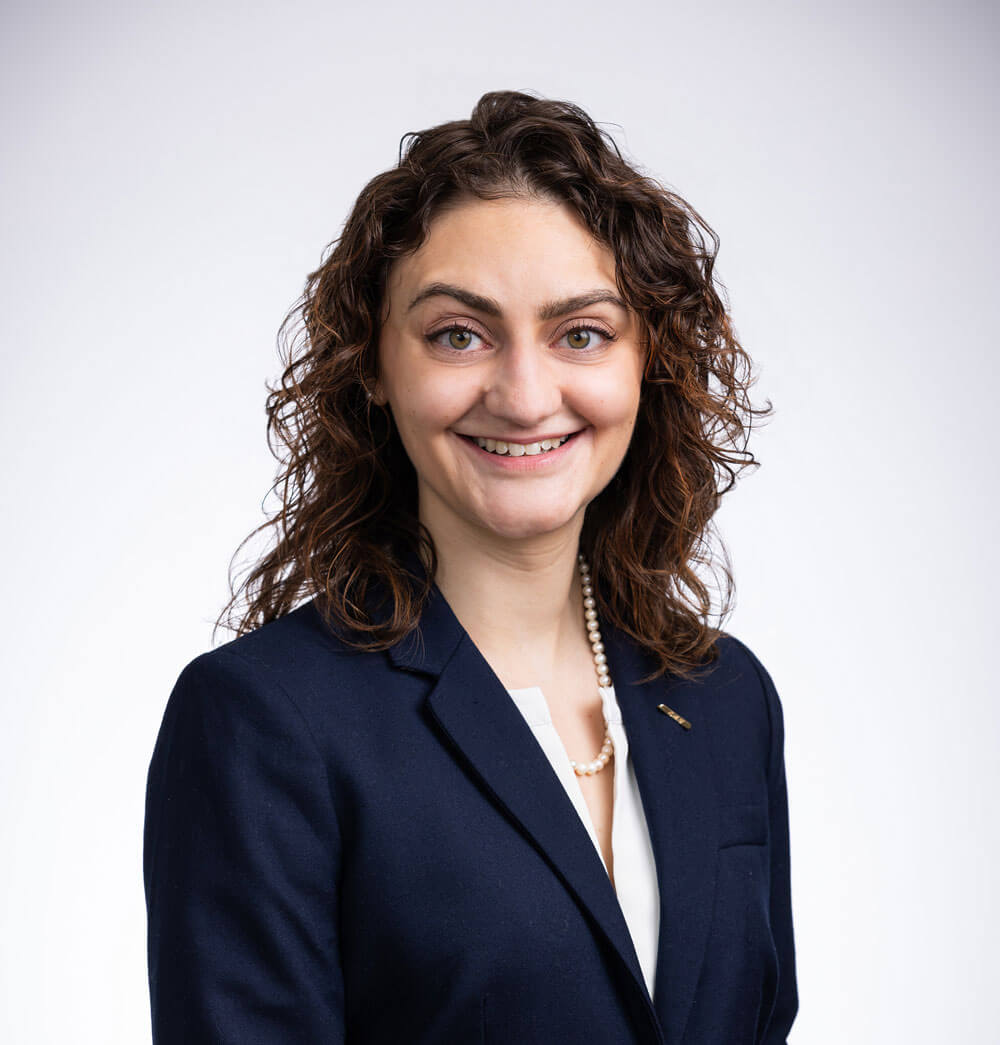
Eve Granatosky, Ph.D.
Dr. Eve Granatosky is an experienced science policy and advocacy professional who specializes in the interdisciplinary opportunities at the intersection of life sciences, physical sciences, and engineering. She leverages her scientific background and in-depth knowledge of federal agencies including the National Institutes of Health (NIH), the Advanced Research Projects Agency for Health (ARPA-H), and the National Science Foundation (NSF) to connect clients to key congressional and agency allies, as well as to advise on strategic planning, relationship building, competing for funding, and shaping new programs. As a trained biochemist and former Hill staffer, she has an appreciation for the nuances of research, policy, and politics, empowering her to effectively represent clients’ interests across the federal science landscape. In her work at Lewis-Burke, Eve has demonstrated success in providing unique insights into emerging opportunities that might otherwise be overlooked across a range of university, non-profit, and industry organizations.
Issue Expertise: Biomedical research, life sciences, biotechnology, biomanufacturing, environmental health, innovation and commercialization, graduate STEM education.
Additional Expertise: Prior to joining Lewis-Burke, Eve was selected for the Genetics and Public Policy Fellowship, during which she worked as a fellow in policy offices at the American Society of Human Genetics and the National Human Genome Research Institute at NIH. Eve also gained valuable experience as a Legislative Fellow for Senator Richard Blumenthal (D-CT), covering health, education, and biomedical research issues. During her doctoral training, Eve led grassroots student efforts to promote science policy and advocacy on her university campus and co-founded the Science Policy Initiative at the University of Notre Dame.
Vital Statistics: Eve earned her Ph.D. from the University of Notre Dame, where she studied pre-clinical drug development for neurodegenerative diseases and developed a deep appreciation for Fighting Irish sports. She also holds a B.S. from Stonehill College, where she majored in biochemistry and minored in dance. Outside of work, Eve enjoys yoga, crossword puzzles, and the New England Patriots.

Otto Katt
Talent and Workforce Development Practice
As a former educator, Otto Katt brings a passion to his workforce and education policy and advocacy work in his Workforce Practice Group Chair role. In addition to those areas, he brings experience in immigration, economic development, research, and tax policy on behalf of Lewis-Burke clients. Otto provides strategic guidance on legislative, administrative, and regulatory issues at the Department of Education (ED) and Department of Labor (DOL), in addition to other federal agencies. He leverages his professional knowledge and expertise, gained while working in the K-12 space and at the state and federal policy level, to provide timely insight and support to a wide range of clients, including institutions and systems of higher education, associations, foundations, and coalitions on key education and workforce policy issues including federal student financial aid, workforce development legislation, ed R&D, the evolving higher education landscape, and the “business” of higher education.
Before joining Lewis-Burke, Otto served as the Education Advisor for Representative Phil Roe, a member of the House Education and the Workforce Committee. While there, he proposed and developed education and workforce development policies for the congressman. He also staffed and advised the congressman at Education and Workforce Committee meetings and district events and engaged various interest groups, stakeholder groups, and agencies regarding pertinent legislation.
Issue Expertise: K-12 and STEM education policy, higher education policy, workforce development policy, federal research policy, student financial aid, accreditation, “business” of higher education.
Additional Experience: Otto has worked in education as a teacher, administrator, and policy analyst in New Jersey, Massachusetts, and North Carolina. These experiences include serving as a Teach For America Corps member.
Vital Statistics: Otto received his B.A. in History from The College of New Jersey and his Masters in International Studies: Latin America from the University of Connecticut. He grew up in New Jersey, runs the occasional marathon, and enjoys exploring far Southeast DC with his family.

Rebecca Adler Miserendino, Ph.D.
Dr. Rebecca Adler Miserendino is a public health and environmental scientist with over fifteen years of professional experience in academic research, the federal government, and government relations. She has worked across scientific disciplines and in the international arena to understand budget and policy trends, enhance institutional effectiveness, and to identify emerging opportunities relevant to the research and higher education communities. Dr. Adler Miserendino leads Lewis-Burkes environmental and international focused issue groups and drives advocacy and consulting strategies to enable clients to compete for federal funds, shape new programs, build international engagement, develop coalitions, and raise their profile with key policy stakeholders.
Issue Expertise: Environmental and life sciences, environmental health sciences, climate change, natural resource management, risk assessment, foreign affairs, multilateral negotiations, and international development.
Additional Experience: Prior to joining Lewis-Burke, Dr. Adler Miserendino was a Senior Adviser, Foreign Affairs Officer, and Physical Scientist at the U.S. Department of State (DOS) in the Bureau of Oceans and International Environmental and Scientific Affairs, serving in both the Office of Global Change (OES/EGC) and the Office of Environmental Quality and Transboundary Issues (OES/EQT). In this capacity, she negotiated on behalf of the United States and advised senior U.S. officials on a variety of crosscutting matters to advance U.S. global environment, climate, and health priorities; and to safeguard the role of science in policy decision-making. While at DOS, Dr. Adler Miserendino covered topics relating to international climate and environment finance, serving as the lead adviser on the Green Climate Fund, the Global Environment Facility, and on specific aspects under the Multilateral Development Banks. In these roles, she was invited to participate in and/or provide advice to several U.S. delegations including: the UN Framework Convention on Climate Change; UN Forum on Forests; Minamata Convention on Mercury, the Basel, Rotterdam and Stockholm Conventions; UN Convention on Biological Diversity; and the UN Convention to Combat Desertification. Additionally, Dr. Adler Miserendino managed a portfolio of U.S. multilateral and bilateral investments and policy initiatives in clean energy, emerging markets, and climate resilience worth over $1.04 billion –to include helping to secure related budget requests.
Dr. Adler Miserendino was a Post-Doctoral Fellow at the University of Toronto, in the Department of Earth Sciences, and a Graduate Research Fellow at the Johns Hopkins University Bloomberg School of Public Health, where she explored the environmental and socioeconomic impacts of artisanal and small-scale gold mining in Suriname, Brazil, Peru, and Ecuador. While at Johns Hopkins, Rebecca also earned a Certificate in Risk Sciences and Public Policy.
Vital Statistics: Rebecca was born in St. Louis, Missouri and holds a dual Bachelor of Science in Biology and the History and Philosophy of Science, from the California Institute of Technology. As a 2006-2007 T.J. Watson Fellow, Rebecca examined the respective roles of government, industry, academia, and civil society in addressing region-specific mine water issues in South Africa, Zambia, Australia, and India. In her spare time, she enjoys traveling, volunteering, swimming, and spending time with her husband and two sons.

Nicole Parker, Ph.D.
Dr. Nicole Parker is a seasoned health policy professional, specializing in the intersection of health and biomedical, behavioral, and social sciences research. At Lewis-Burke, she focuses on federal research policy, grants policy, and education and workforce policy, particularly within key agencies like the National Institutes of Health (NIH), the Advanced Research Projects Agency for Health (ARPA-H), and other grant-making bodies under the Department of Health and Human Services (HHS). Leveraging her background as a biomedical researcher, Nicole effectively connects with clients aiming to expand their biomedical research and health-funding portfolios. Her prior role as a federal contractor in various NIH offices uniquely positions her to help clients navigate the agency's priorities and operations.
During her tenure at Lewis-Burke, she has successfully supported a diverse array of clients, including universities, non-profits, societies, and foundations. Her comprehensive understanding of these fields, coupled with her passion for driving positive change, underscores her effectiveness in advancing health policy objectives and fostering innovation in biomedical research.
Issue Expertise: Biomedical research, research and grants policy, graduate education, biomedical training and workforce, STEM education, and broadening participation in STEM.
Additional Expertise: Before joining Lewis-Burke, Dr. Nicole Parker served as a Science Policy Analyst at Ripple Effect, a management consulting firm providing services to federal, private, and non-profit clients. During her tenure, she contributed to impactful projects within prestigious institutions such as the NIH and the Center for Medicaid and Medicare Services (CMS). Nicole's exemplary work ethic and expertise were further honed during her tenure as a Christine Mirzayan Science and Technology Policy Graduate Fellow at The National Academies of Sciences, Engineering, and Medicine. In this role, she worked with the Board on Higher Education and Workforce, solidifying her dedication to science policy, particularly in the realms of education and workforce development.
Vital Statistics:
Dr. Nicole Parker earned her Ph.D. in biochemistry and molecular biology from the Johns Hopkins Bloomberg School of Public Health in 2017. Her doctoral research focused on elucidating the role of the growth factor GDNF in the replication and differentiation of stem cells in the testis. Nicole is also a proud graduate of the Meyerhoff Scholarship Program at the University of Maryland Baltimore County (UMBC), where she earned a Bachelor of Science in Biochemistry and Molecular Biology, with a minor in sociology, in 2011.
In her leisure time, Nicole cherishes moments with her family and dedicates herself to service activities with her sorority, Delta Sigma Theta Sorority, Inc. She also enjoys participating in her monthly book club, a testament to her enduring curiosity and passion for lifelong learning.