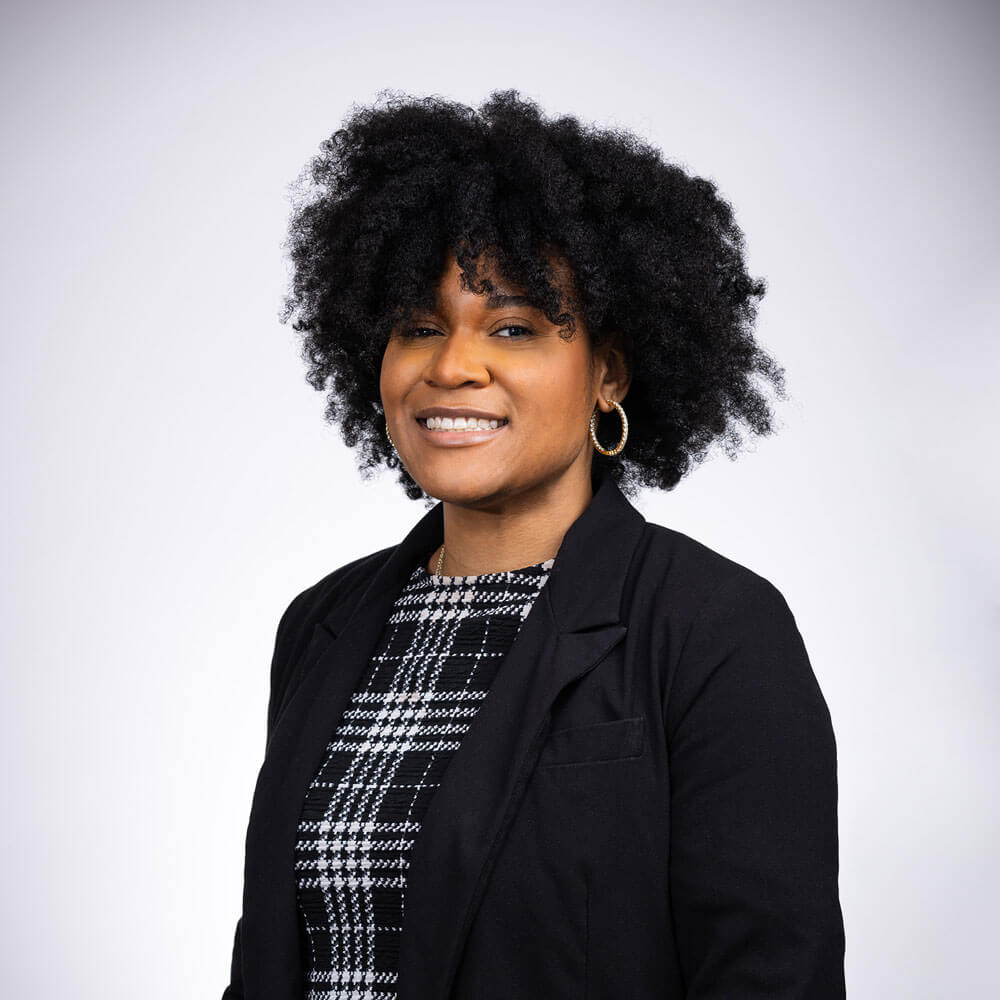

Sharon Eshelman

Sharon Eshelman is a strategic planning and stakeholder management professional with two decades of hands-on government service and consulting experience, most of which has been focused on national security policy.  At Lewis-Burke, Sharon serves as a strategic advisor to clients helping to advance their defense, cybersecurity, and homeland security engagement and research priorities.  Sharon joins Lewis-Burke after spending two years as Senior Advisor in the Office of Legislative Affairs for the Department of Homeland Security (DHS), where she guided the Department’s response to a myriad of Congressional oversight investigations and served as the primary liaison with Capitol Hill on Intelligence matters. Ms. Eshelman previously served as the National Security Subcommittee Staff Director for the U.S. House of Representatives Oversight and Government Reform Committee, overseeing more than 35 investigations into the Departments of Justice (DOJ), Homeland Security, State, Veterans’ Affairs, Defense, and the Intelligence Community.   

Issue Expertise: Defense and national security, homeland security, immigration, criminal justice, cybersecurity, counterterrorism, congressional oversight. 

Additional Experience:  From 2009 to 2017, Ms. Eshelman worked as a professional project manager, first at Deloitte Consulting and then Sentinel HS Group, where she supported strategy and policy clients within the Homeland, Justice and Treasury Departments.  Prior to becoming a consultant in 2009, Ms. Eshelman served five years with the federal government, assuming various policy and legislative roles in both DHS and the White House.  Throughout her career, she has contributed to a variety of federal initiatives such as: the White House Strategy (and Implementation Plan) for Pandemic Influenza; national disaster and COOP planning; various criminal justice and civil enforcement plans; federal fraud, waste and abuse investigations; victim support initiatives; federal program, planning, budgeting and execution (PPBE) efforts; state and local law enforcement outreach campaigns; government re-organizations and has written pieces included in the President’s Daily Briefing Book.    

Vital Statistics:Ms. Eshelman received a B.S. in Business Administration from American University in Washington, DC, and a M.A. in National Security and Strategic Studies from the U.S. Naval War College in Newport, RI, and has completed additional coursework in political science and education.   

Beyond her professional and academic accomplishments, Ms. Eshelman has volunteered with the Anne Arundel County Public School System, Junior Achievement, National Youth Leadership Forum and College Summit organizations, and continues to look for ways to support youth development initiatives in the National Capital Region. 

Sharon is originally from the Greater Philadelphia area and is an avid Eagles, NASCAR and cheesesteak fan.  She enjoys playing golf and frisbee, jogging, swimming, and spending time outside with her husband and three energetic children.   


Mia Luckett

Mia Luckett delivers timely insight, detailed research, and federal agency and congressional updates to Lewis-Burke clients. Mia specializes in monitoring and analyzing agency and legislative activity related to the National Science Foundation (NSF), Department of Defense (DOD), and the Department of Justice (DOJ).

Issue Expertise: Technology, Engineering Communities, Social Science, and Public- Private Partnerships.

Additional Information: Before joining Lewis-Burke Associates, Mia was a legal administrative assistant to a criminal defense and real estate attorney. Mia also interned with the district office of Congressman Bobby Scott (VA-03), where she gained an understanding of education policy and aided incarcerated constituents in utilizing government agencies. Mia was previously an Eben Tisdale Public Policy Fellow with the Fund for American Studies. As a fellow, she interned with lobbying firm Mehlman Castagnetti Rosen & Thomas and worked with the Technology CEO council. During this time, Mia gained expertise in high-tech public policy, the latest innovations in science and technology, and conducted research on the effectiveness of bipartisanship.

Vital Statistics: Originally from the southern suburbs of Chicago, Mia graduated magna cum laude from Hampton University with a Bachelor of Arts degree in Political Science. While attending Hampton, Mia also joined Zeta Phi Beta Sorority, Inc., and often does community service with other organization members. Mia is a self- proclaimed foodie and loves trying out a new recipe, or the latest and trendiest restaurants. In her free time Mia also enjoys traveling, reading, and working out.


Advanced Intelligence on New Competitive Funding Mechanisms

NASAs Space Technology Mission Directorate was beginning to consider new competitive research institutes in engineering technologies. Lewis-Burke worked with the agency to think through the approach, shared information about new topics well ahead of the solicitation, and enabled a client to successfully obtain a multi-million dollar funding award.


Building Support for NASA’s Heliophysics Division

NASAs Heliophysics Division budget underwent a multi-year period of stagnation and decline while other NASA science divisions consistently received funding increases. This was particularly concerning for one Lewis-Burke client with leading capabilities in solar science and experience partnering with NASA on Heliophysics missions.

Lewis-Burke developed an advocacy strategy designed to foster congressional support for the Heliophysics Division. The strategy recognized that NASA Heliophysics lacked both an effective message and an organized constituency to carry it. Lewis-Burke began by crafting a messaging approach that connected the recommendations of the solar and space physics community with congressional priorities for space exploration. Lewis-Burke then worked with the client to form a coalition of universities with ties to the NASA Heliophysics Division.

This concerted advocacy effort enabled multiple universities to simultaneously promote a single set of community-driven priorities to congressional appropriators.  Lewis-Burkes efforts were ultimately successful.  Between FY 2018 and FY 2020, funding for the Heliophysics Division has increased by $37 million, bringing total funding for NASA Heliophysics to the highest level it has seen in a decade.


Establishing a Cybersecurity Center

Lewis-Burke led the development and facilitated execution of a comprehensive federal strategy to obtain sustained support for a federal research and development institute and re-launch its next phase with a new long-term Department of Defense (DOD) contract. A key element of this strategy was establishing a new national cybersecurity center focused on the manufacturing sector and obtaining funding to support the centers growth.

Lewis-Burke helped increase awareness and support for the institute and its role in strengthening cybersecurity with government stakeholders and leveraged key industry members of the institute to expand congressional awareness and outreach. As a result, Lewis-Burke helped successfully advocate for increased DOD funding in FY 2020 to establish and accelerate growth of the cybersecurity center on a national scale.

Lewis-Burke continues to support the clients efforts to expand awareness of the role of the cybersecurity center in delivering national security capabilities and engage with key DOD leaders engaged in cybersecurity efforts, including the Assistant Director for Cybersecurity in the DODs Research Enterprise and the Departments Chief Information Security Officer.

Work continues to engage the military Services in their defense industrial base and supply chain cybersecurity challenges and develop options to diversify funding streams to secure the future operations of the institute.


Enhance the Classified Workforce Pipeline

On behalf of a university client, Lewis-Burke drafted and lobbied for a pilot program to ensure undergraduate and graduate students are fully cleared upon completion of their degree to ensure seamless transition into the classified workforce.

In coordination with university leadership, the congressional delegation, and appropriate committee staff, Lewis-Burke crafted appropriations and National Defense Authorization Act (NDAA) language to support this effort.

The congressional advocacy is complemented with engagement with the Department of Defense, including the Army Test and Evaluation Command, the STEM Office, and the Basic Research Office.

The process illustrates the comprehensive approach—including coordinated outreach to multiple decision-makers in both the agencies and in Congress—that Lewis-Burke has successfully employed over the course of its time in business.


Leland Cogliani, J.D.

Energy Practice

Leland Cogliani has over 20 years of experience advancing science and technology priorities for research institutions.  Leland works closely with congressional authorizing and appropriations committees and federal research agencies on behalf of academic institutions, scientific societies, facility management organizations, and energy startups to create new research initiatives and programs, advance science, and energy infrastructure projects, and increase federal research funding.   

As the firm’s Energy Practice lead and Co-Chair of the Energy Sciences Coalition, Leland is a leading voice in the higher education and research advocacy community to advance basic and applied energy research and development programs, especially at the Department of Energy (DOE).  Leland also uses his substantive subject matter expertise in nuclear security and nonproliferation science and technology issues to grow the participation of institutions of higher education in addressing national security challenges.  Leland is currently a board member of the Arms Control Association and is a frequent speaker at science and technology forums. 

Prior to joining Lewis-Burke, Leland was the lead Senate Appropriations Committee staff member, with budget and oversight responsibility for $17 billion in federal programs, including the DOE Office of Science, the Advanced Research Projects Agency-Energy (ARPA-E), the National Nuclear Security Administration (NNSA), DOE intelligence programs, and DOE national laboratories.  

Issue Expertise: Appropriations and congressional budget process, basic and applied energy research (DOE Office of Science; ARPA-E; renewable, energy efficiency, fossil, carbon management, nuclear, and grid-related research); emerging technology areas, including artificial intelligence, quantum science and technology, microelectronics, advanced computing, and biotechnology; energy infrastructure investments; DOE national laboratories; nuclear security and nonproliferation (National Nuclear Security Administration)  

Additional Experience: Prior to the Senate, Leland was a Senior Analyst in the Natural Resources and Environment Division at the U.S. Government Accountability Office (GAO) with oversight responsibilities over U.S. nuclear weapons and nuclear nonproliferation programs.  He authored more than a dozen reports to Congress on science and national security issues, including life extension programs of nuclear warheads, the U.S. fusion program, and the International Atomic Energy Agency nuclear safeguards activities.   

Vital Statistics: Leland earned his Bachelor of Arts in International Studies at Boston College and his Master of Arts in International Affairs at the George Washington University Elliott School of International Affairs. He received a Juris Doctor from Catholic University Columbus School of Law.  Leland is a proud father of two daughters and enjoys traveling with his family around the country and the world seeking new adventures.  Leland is a fourth-degree black belt in taekwondo and continues to train twice a week.  Born in Rome, Italy, Leland is a native Italian speaker.