

Anjana Mohan
Anjana supports Lewis-Burke Associates by providing clients with insights on federal research and development priorities, funding opportunities, stakeholder engagement opportunities, and congressional activity across science, technology, and defense areas. Anjana leverages her background in federal policy research and government affairs to monitor emerging issues and help clients navigate the evolving policy landscape.
Issue Areas: Defense and National Security, Critical and Emerging Technologies, Science Policy.
Additional Experience: Prior to joining Lewis-Burke, Anjana was at the U.S. Department of State’s Bureau of Consular Affairs, where she supported visa processing operations and initiatives to improve efficiency at overseas posts. She also served as a Legislative Intern in Senator Mark Warner’s (VA) Washington, DC office, assisting constituents in navigating federal agencies and supporting legislative staff on issues including immigration, education, agriculture, trade, and appropriations.
Vital Statistics: Born and raised in Northern Virginia, Anjana graduated with High Distinction from the University of Virginia with bachelor’s degrees in Public Policy and Leadership, and Global Development Studies. Outside of work, Anjana enjoys reading, baking, traveling, and exploring Washington, DC.


Helen Blaine, Ph.D.
Helen Blaine is a Senior Associate at Lewis-Burke Associates, specializing in energy technologies. Helen provides strategic counsel to help clients navigate emerging opportunities across the federal science and technology landscape, bringing both technical scientific expertise and direct executive branch experience. Prior to joining the firm, she served as an AAAS Science & Technology Policy Fellow in the Department of Energy’s Office of Science. During her time at the agency, Helen supported DOE leadership on a portfolio that included international science cooperation, research security, and interagency coordination. This hands-on experience gave her a deep understanding of the inner workings of DOE and its National Laboratories, including current priorities and funding pathways. In addition, Helen maintains strong relationships and insights spanning executive branch departments and agencies, enabling her to help clients navigate federal environments and maximize opportunities.
Issue Expertise: Fundamental and applied energy research, emerging technologies, artificial intelligence, research security, international science policy, interagency coordination, federal basic research programs, workforce development.
Additional Experience: Before transitioning into policy, Helen completed her Ph.D. in Biological and Biomedical Sciences, focusing on bacterial DNA replication. Her graduate work strengthened her analytical skills and her ability to quickly distill dense, technical information, strengths she now applies to federal science and technology policy.
Vital Statistics: Helen holds a Ph.D. in Biological and Biomedical Sciences from Washington University in St. Louis and a B.S. in Biological Sciences from the University of Missouri. Outside the office, she enjoys spending time with her dog, Boots, catching the latest horror movies, and working on jigsaw puzzles.
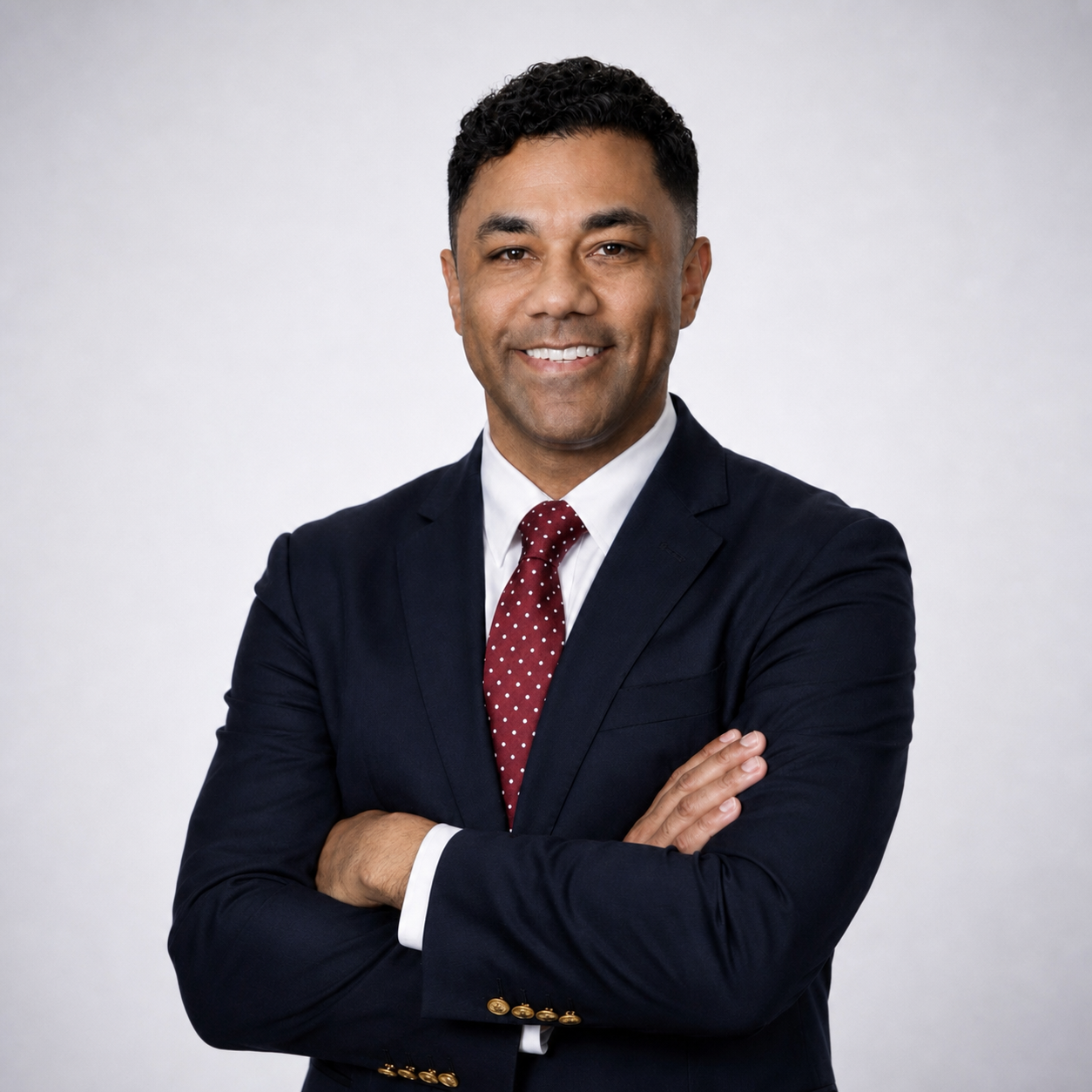
Joe Herrbach
Joe Herrbach joins Lewis-Burke after nearly a decade of experience on Capitol Hill advising Members of Congress on education, workforce development, appropriations, and oversight issues. Drawing on senior policy roles in both the House and Senate, Joe provides clients with strategic insight into the legislative process, federal funding opportunities, and the evolving policy landscape affecting education, workforce, and research programs.
Prior to joining Lewis-Burke, Joe served as an Education Policy Advisor to Senator Patty Murray (D-WA), where he managed a broad portfolio spanning early childhood education, K-12 education, higher education, workforce development, and Labor-HHS-Education appropriations. In that role, he advised the Senator on legislation, oversight, nominations, and budget matters before the Senate Health, Education, Labor, and Pensions (HELP) Committee and the Appropriations Committee. Joe also worked closely with state and local stakeholders across Washington state to advance federal education and workforce priorities.
Before joining Senator Murray’s office, Joe served as a Legislative Assistant to Senator Raphael Warnock (D-GA), where he advised the Senator on appropriations, education, workforce development, labor, and housing issues. Prior to joining Senator Warnock’s office, Joe served as Professional Staff for Chairman Bobby Scott (D-VA) on the House Education and Labor Committee, helping develop and advance legislation related to K-12 education programs. Joe began his Capitol Hill career in the office of then-Representative and former Secretary of Housing and Urban Development, Marcia Fudge (D-OH), where he managed a broad domestic policy portfolio spanning education, appropriations, housing, national security, and economic issues. This experience provided the foundation for his later specialization in education and workforce policy.
Issue Expertise: Education policy, workforce development, appropriations, federal research and innovation policy, congressional oversight, and federal budget and funding processes.
Vital Statistics: Joe earned a bachelor’s degree from THE Ohio State University and a master’s degree from Dartmouth College. Originally from Columbus, Ohio, he now lives in Washington, D.C., where he enjoys exploring the city, following college athletics, Cleveland sports, and spending time with family and friends.

Tony DiGiovanni
Tony joins the energy practice at Lewis-Burke after a twenty-five-year career in federal service as a senior executive leader with extensive agency and Hill expertise in budget, appropriations, and authorizations. Over his career at the Department of Energy, on Capitol Hill, and at the National Science Foundation he developed broad expertise in the federal budgeting, appropriations, and authorization process; basic and applied energy, science and technology innovation, and workforce development research and policy issues; strategic engagement with the executive and legislative branches; and the inner workings of agency operations.
Issue Expertise: Tony has an extensive background on the federal budget and appropriations process, deep expertise in Congressional and OMB engagement strategy, and broad experience in energy and science research and policy and working with national laboratories and universities.
Additional Experience: Tony recently came to Lewis-Burke from federal service, most recently serving as Deputy Budget Director of the National Science Foundation. Prior to joining NSF, he served as the Found Budget Director and Congressional Strategist of the Advanced Research Projects Agency – Energy (ARPA-E) at the U.S. Department of Energy (DOE). He also served as the Director of Budget and Finance for the DOE Office of Civilian Radioactive Waste Management (a.k.a. Yucca Mountain), as a Special Adviser on Sustainable Development with the DOE Office of Policy and International Affairs, and in several positions with the DOE Office of the Chief Financial Officer including several years as DOE liaison to the U.S. House and Senate Appropriations Energy and Water Development subcommittees. He served as a Congressional Fellow with the U.S. House Appropriations Energy and Water Development subcommittee and as a Congressional Fellow in the U.S. Senate for a member on the Energy and Natural Resources Committee.
Vital Statistics: Tony earned a master’s degree in public policy from the Gerald R. Ford School of Public Policy, and an undergraduate degree in cultural anthropology, both at the University of Michigan. While an undergraduate he played for the men’s lacrosse club team and was an assistant coach for the team while he was in graduate school. Tony enjoys being active playing recreational basketball and softball, golfing, bicycling and swimming. He also enjoys spending time outdoors camping and hiking with his family, especially in dark skies places where the Milky Way is visible at night.
Technology-Based Economic Development Seeking Opportunities and Capitalizing
When Congress and the White House began prioritizing largescale investments in regional economic growth leading up to the passage of the CHIPS and Science Act, Lewis-Burke recognized this moment and founded the Technology Based Economic Development (TBED) Practice that leveraged over a decade of expertise in this space to provide unmatched intelligence, advocacy, insight, and quality products. The full impact of Lewis-Burke's services in this space manifested with Congress’ approval of the Regional Tech Hubs program at the Department of Commerce (DOC). The program is one of the largest and most competitive place-based economic development initiatives in American history that seeks to drive diverse, regional coalitions across the country to advance global competitiveness around key technology areas. Lewis-Burke was on the ground floor of this initiative as it made its way through Congress. As such, the firm was intimately aware of both the promise of the program as well as all that needed to be successful. To ensure clients had a leg-up, Lewis-Burke's TBED Practice went to work months before the solicitation was even released to position clients to succeed, including providing advance intelligence and guidance materials that align with Congress and DOC’s visions for the program; in-depth consultation to lay the groundwork for broader community partners; meetings with federal officials; and more. By the time the solicitation was released, engaged clients were ready.
Through these initial efforts and a myriad of support throughout the application process, our clients enjoyed great success. EDA would eventually receive 370 applications from regions across the country, and of the 31 Tech Hubs designated by EDA to be eligible to receive additional funding, over a dozen involved Lewis-Burke clients and of the 12 Hubs selected to receive the initial round of implementation funding, seven involved Lewis-Burke clients. Moreover, a research management organization client would go on to serve as a backbone entity for the program’s implementation. The TBED practice at Lewis-Burke aims to position clients of all sizes to accomplish their regional innovation goals.

Shanni Silberberg
Dr. Shanni Silberberg serves as a Principal at Lewis-Burke Associates, providing strategic expertise to the firm's defense portfolio. With a unique background spanning neuroscience research and federal science policy, she brings a deep understanding of the intersection between scientific advancement and national security priorities. Dr. Silberberg is an expert in navigating federal regulatory environments, developing legislative strategies, and building coalitions to advance science and innovation. Dr. Silberberg spent five years advising the Director of Basic Research at the Department of Defense, where she shaped policy on research protection, international talent retention, STEM education, and scientific integrity initiatives. She was instrumental in developing DoD's research protection policy for fundamental research, working across federal agencies, Congress, and the White House Office of Science and Technology Policy.
Issue Expertise: Defense science and technology, research security, basic research policy, STEM immigration, international scientific collaboration, research protection, scientific integrity, and federal R&D funding mechanisms, neuroscience, and genetics.
Additional Experience: Prior to her work advising DOD, she worked in the Engineering Division at the National Science Foundation, identifying research gaps and creating scientific funding programs to address critical challenges in biological and chemical engineering. Her experience also includes monitoring and evaluation of development programs at the United States Agency for International Development. Throughout her career, she has successfully secured federal grants for research, created grant programs within the federal government, and reviewed federal grant proposals from universities.
Vital Statistics: Dr. Silberberg holds a B.S. in Neurobiology and Physiology from the University of Maryland College Park and a Ph.D. in Neuroscience from the University of California San Francisco. She was a AAAS Science and Technology Policy Fellow at the United States Agency for International Development and the National Science Foundation. When not advocating for science policy, she spends time in nature, makes wearable art, and travels (aiming to visit all 50 states with her kids by 2050).

Julia Rizzo
Julia Rizzo, Associate, supports Lewis-Burke by researching federal agencies and providing insights on issues that intersect related to engineering, technology, defense innovation, commercialization,
Julia specializes in engineering, economic development, defense, public-private partnerships, and technology. Before joining Lewis-Burke Associates, she interned at the National Science Foundation’s Technology, Innovation, and Partnerships Directorate, where she assisted with the Regional Innovation Engines Program. This experience provided her with valuable insights into federal government operations and regional innovation initiatives across the country, prompting her to think critically about federal funding and its impact. Additionally, Julia has experience in state and local government through her work with the Ohio Senate and the Franklin County Board of Commissioners’ Office, which has given her a solid understanding of funding flows and stakeholder engagement.
Julia graduated magna cum laude from The Ohio State University with a bachelor’s degree in public management, leadership, and policy and a specialty in science and engineering in the public interest.

Zak Kukoff
Zak Kukoff has over a decade of experience in the technology and venture capital sectors, focusing on early-stage investments and entrepreneurship. Zak works closely with founders, startups, and investors to help them navigate Washington and the government.
As the firm’s Tech and Venture Practice Chair, Zak is a leading voice in the startup and investment community, advocating for technological progress. He leverages his experience as both a founder and investor to provide valuable insights to Lewis-Burke clients. Zak also serves as a Non-Resident Senior Fellow to the Foundation on American Innovation and a Visiting Fellow at George Mason University’s National Security Institute.
Prior to joining Lewis-Burke, Zak was a venture capitalist at General Catalyst, where he served on the boards of companies like Overjet, Vial, and Luminai. He also founded and sold an education technology company.
Issue Expertise: Venture capital, startup ecosystems, healthcare technology, deep technology, entrepreneurship in higher education, family foundations, and emerging technology trends.
Vital Statistics: Zak earned his Bachelor of Arts in behavioral economics from New York University. From a family connection to Autism, he also founded Autism Ambassadors, a non-profit organization that teaches neurotypical students how to support their peers on the autism spectrum and remains active in supporting it today.