

Brooke Wallenstein
Brooke Wallenstein supports Lewis-Burke clients by providing strategic insights and analysis on issues related to higher education, health, and research policy. Drawing on experience in both the public and private sectors, she helps clients navigate the federal policy landscape through legislative and policy analysis, congressional monitoring, agency engagement, and strategic communications. Her portfolio focuses on health, biomedical research, science, and higher education policy. Brooke primarily covers the Department of Health and Human Services (HHS), including the National Institutes of Health (NIH) and the Advanced Research Projects Agency for Health (ARPA-H), the Department of Education, and the National Science Foundation (NSF), particularly the Directorate for Biological Sciences (BIO) and the Directorate for STEM Education (EDU).
Issue Expertise: Higher Education and Health
Additional Experience: Prior to joining Lewis-Burke Associates, Brooke interned for Senate Democratic Leader Chuck Schumer, where she supported the communications team through media monitoring, daily press briefings, and communications operations. This experience provided her with a strong understanding of congressional communications strategies, media relations, and the day-to-day operations of a Senate leadership office.
Brooke also interned in the district office of Representative Jim McGovern, where she gained firsthand insight into how federal policies and legislation affect local communities. Through this role, she worked with constituents, grassroots organizations, and state and local stakeholders, strengthening her understanding of the connection between federal policymaking and community impact.
Vital Statistics: Brooke grew up in Rye Brook, New York, and earned a Bachelor of Arts in Political Science and Journalism from the University of Massachusetts Amherst. During her time at UMass Amherst, she participated in the Social and Behavioral Sciences (SBS) in DC Program, a partnership with The Washington Center. Through this program, she studied and interned in Washington, D.C., where she gained hands-on experience working for Lobbyit, a government relations and lobbying firm.
Outside of the office, Brooke enjoys reading, spending time outdoors, and traveling.


Helen Blaine, Ph.D.
Helen Blaine is a Senior Associate at Lewis-Burke Associates, specializing in energy technologies. Helen provides strategic counsel to help clients navigate emerging opportunities across the federal science and technology landscape, bringing both technical scientific expertise and direct executive branch experience. Prior to joining the firm, she served as an AAAS Science & Technology Policy Fellow in the Department of Energy’s Office of Science. During her time at the agency, Helen supported DOE leadership on a portfolio that included international science cooperation, research security, and interagency coordination. This hands-on experience gave her a deep understanding of the inner workings of DOE and its National Laboratories, including current priorities and funding pathways. In addition, Helen maintains strong relationships and insights spanning executive branch departments and agencies, enabling her to help clients navigate federal environments and maximize opportunities.
Issue Expertise: Fundamental and applied energy research, emerging technologies, artificial intelligence, research security, international science policy, interagency coordination, federal basic research programs, workforce development.
Additional Experience: Before transitioning into policy, Helen completed her Ph.D. in Biological and Biomedical Sciences, focusing on bacterial DNA replication. Her graduate work strengthened her analytical skills and her ability to quickly distill dense, technical information, strengths she now applies to federal science and technology policy.
Vital Statistics: Helen holds a Ph.D. in Biological and Biomedical Sciences from Washington University in St. Louis and a B.S. in Biological Sciences from the University of Missouri. Outside the office, she enjoys spending time with her dog, Boots, catching the latest horror movies, and working on jigsaw puzzles.
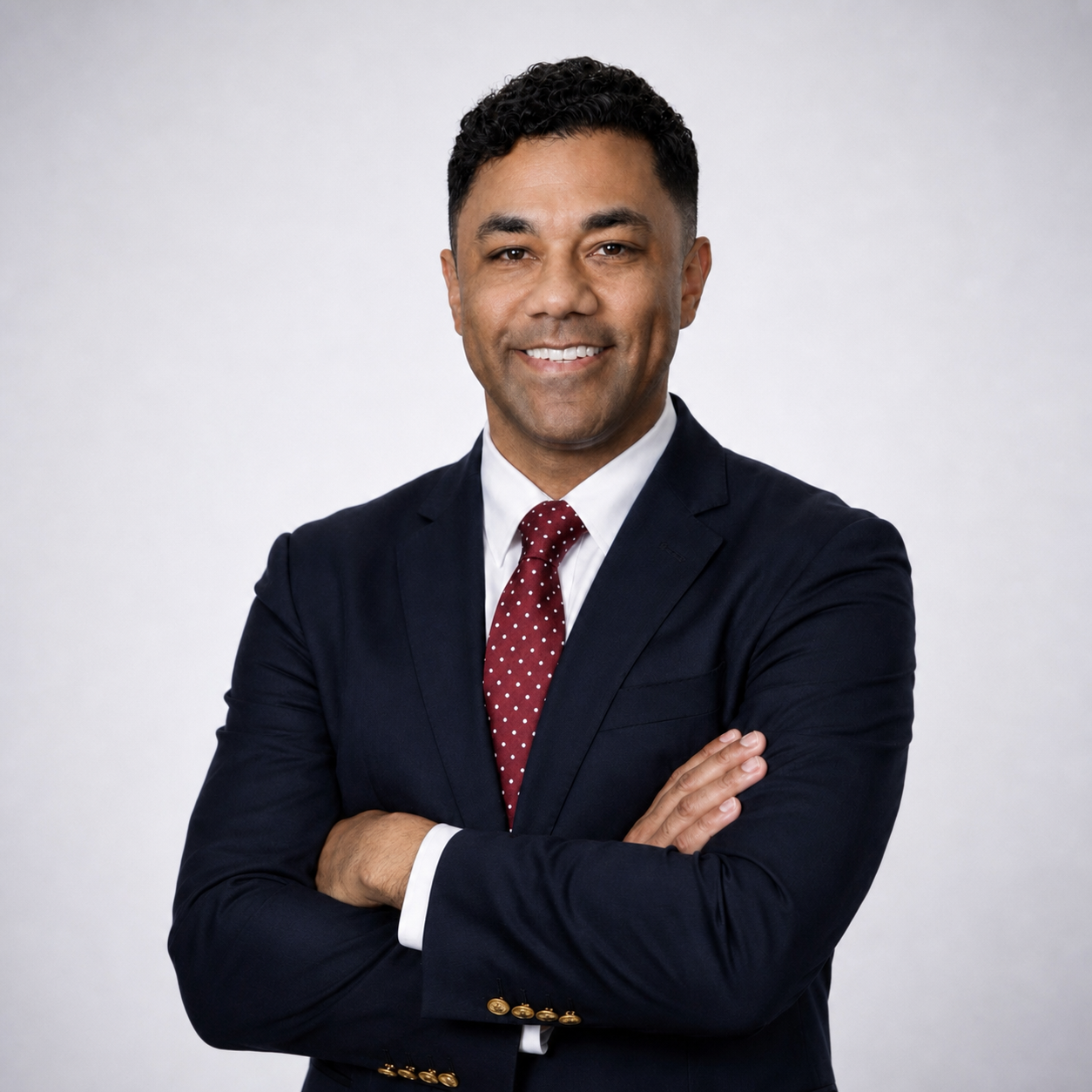
Joe Herrbach
Joe Herrbach joins Lewis-Burke after nearly a decade of experience on Capitol Hill advising Members of Congress on education, workforce development, appropriations, and oversight issues. Drawing on senior policy roles in both the House and Senate, Joe provides clients with strategic insight into the legislative process, federal funding opportunities, and the evolving policy landscape affecting education, workforce, and research programs.
Prior to joining Lewis-Burke, Joe served as an Education Policy Advisor to Senator Patty Murray (D-WA), where he managed a broad portfolio spanning early childhood education, K-12 education, higher education, workforce development, and Labor-HHS-Education appropriations. In that role, he advised the Senator on legislation, oversight, nominations, and budget matters before the Senate Health, Education, Labor, and Pensions (HELP) Committee and the Appropriations Committee. Joe also worked closely with state and local stakeholders across Washington state to advance federal education and workforce priorities.
Before joining Senator Murray’s office, Joe served as a Legislative Assistant to Senator Raphael Warnock (D-GA), where he advised the Senator on appropriations, education, workforce development, labor, and housing issues. Prior to joining Senator Warnock’s office, Joe served as Professional Staff for Chairman Bobby Scott (D-VA) on the House Education and Labor Committee, helping develop and advance legislation related to K-12 education programs. Joe began his Capitol Hill career in the office of then-Representative and former Secretary of Housing and Urban Development, Marcia Fudge (D-OH), where he managed a broad domestic policy portfolio spanning education, appropriations, housing, national security, and economic issues. This experience provided the foundation for his later specialization in education and workforce policy.
Issue Expertise: Education policy, workforce development, appropriations, federal research and innovation policy, congressional oversight, and federal budget and funding processes.
Vital Statistics: Joe earned a bachelor’s degree from THE Ohio State University and a master’s degree from Dartmouth College. Originally from Columbus, Ohio, he now lives in Washington, D.C., where he enjoys exploring the city, following college athletics, Cleveland sports, and spending time with family and friends.
Driving Agency Collaborations to Create New Education Research Opportunities
Over several years, the education research community was frustrated by the lack of collaboration between the National Science Foundation and the Department of Education, leading innovative research to be underutilized by practitioners and making scaling of NSF-funded discoveries difficult. Lewis-Burke recognized an opportunity to confront this challenge with congressional focus on competitiveness and learning loss from the COVID-19 pandemic, and Administration changes bringing attention to translation of research results. Lewis-Burke worked with a client coalition interested in this issue, securing authorizing language in the CHIPS and Science Act that created a new NSF center scale program for partnership and education translation, as well as FY 2022, 2023, and 2024 appropriations language encouraging these partnerships and the specific creation of the center scale program.
Elevating Innovation at a Less-Research Intensive System Campus
A less research-intensive campus within a larger university system client developed and launched an innovative fast-track education program, incorporating elements of cooperative learning, industry partners, and social improvement for students. As the program gained early attention, Lewis-Burke developed an appropriations strategy for the Department of Education to use its Experimental Sites authority to support various regulatory flexibilities for the program and ensure student aid dollars would be able to flow without issue. Collaborating with a senior Senator in the client’s delegation, Lewis-Burke developed an appropriations request and assisted with a multi-member letter to the Appropriations Committee that ultimately led to the Experimental Site designation being included in the FY 2024 spending package.
Increasing Funding For and Securing Reauthorization of Aviation Workforce Programs
Lewis-Burke worked closely with a university client to identify priority areas for the year, which included increasing funding and expanding project eligibility for FAA’s premier aviation workforce development grant program by securing language in the FAA Reauthorization Bill. The Lewis-Burke team developed a reauthorization strategy to advocate for funding increases, expand the eligibility of specific projects within the program, and ensure its longevity through reauthorizing legislation. The firm achieved success by securing authorizing language that expanded project eligibility within the program and a 200 percent funding increase for the program in the authorization legislation that was passed and signed into law.
Expanding and Forging New Workforce Policy Frontiers
In the face of declining enrollments, questions about Return on Investment (ROI), and sharp policy critiques in higher education, Lewis-Burke's Talent and Workforce Development Practice Group has taken a leading role in shaping a vision for four-year higher education institutions. This vision positions them as crucial players in meeting tomorrow's workforce development needs. Through firm efforts, several clients have gained prominence in a domain traditionally dominated by two-year institutions. Additionally, Lewis-Burke experts have been called upon to provide legislative and policy recommendations to multiple congressional committees and offices. These recommendations have influenced legislative efforts, including the Higher Education Act (HEA), the National Apprenticeship Act (NAA), and the Workforce Innovation and Opportunity Act (WIOA).
Shaping Higher Education Regulations
Working alongside a higher education society, Lewis-Burke leveraged in-depth knowledge of the federal regulatory space to shape federal regulations that would impact the society’s primary program of study. Lewis-Burke was able to navigate the client through the relevant U.S. Department of Education regulatory process as well as provide strategic advice on engaging with the agency that would allow for the society to influence the forthcoming policies from the Department. As a result of the effort, the Department noted the society’s concerns/perspective on the regulations in its official response, and the society’s recommendations for the education regulations were included in the final proposed regulations. Lewis-Burke continues to sustain strategic relationships within the Department to track the impact of the regulations for the society’s membership.

Mikaela Turner
Mikaela Turner supports Lewis-Burke by utilizing her background in legal research, higher education, and professional development, to provide insights on programs and policies within the Department of Education, Workforce Development, and Transportation.
Issue Expertise: Education, workforce, transportation.
Additional Experience: Mikaela has two years of experience in legal research, professional writing and editing, and public speaking as a Judicial Intern for district courts in Colorado and Texas.
Vital Statistics: Mikaela graduated from Western Colorado University with her B.A. in Politics and Government, Pre-Law with a minor in English and a Technical Writing Certificate. During her time at Western, Mikaela served on the Student Government Association as a Senator and Vice President of Internal Affairs, as well as President of Pi Sigma Epsilon, a nationally recognized business fraternity. She is originally from Dallas, TX and in her free time, she enjoys skiing and hiking.